How to Choose a Bangkok Hotel for Easy Access to Both BKK and DMK Airports
Bangkok has two major airports, Suvarnabhumi (BKK) and Don Mueang (DMK), located on opposite sides of the city. Many itineraries use both—for example, arriving at BKK on an international flight and departing from DMK on a low-cost carrier to Chiang Mai, Phuket, or Hanoi. An unsuitable hotel location can add an hour or more to each transfer. Which Bangkok hotels are best for travellers flying through both BKK and DMK airports? The answer depends less on star ratings and more on where a hotel sits between the two hubs and how well it connects to the rail network. The four steps below explain how to evaluate your options.
Step 1: Map Your Flight Pattern First
Before comparing accommodations, note which airport you will use on arrival, which on departure, and at what time of day. A 7:00 am departure from DMK requires a very different location from a midday departure from BKK. If you use both airports on the same trip, choosing a transit-friendly hub along central rail corridors is the most practical strategy. Staying adjacent to one airport makes the subsequent transfer to the other long and expensive. Neighbourhoods such as Ratchada, Rama 9, and Phaya Thai are better balanced than the airport districts, as they sit at an equal distance from both air hubs.
Step 2: Check Which Rail Lines Serve the Hotel
Bangkok traffic is unpredictable, so rail access is your most reliable safeguard against gridlock. For BKK, the Airport Rail Link runs to Makkasan and Phaya Thai, where passengers can connect to the MRT or BTS. For DMK, the SRT Red Line connects the airport to Krung Thep Aphiwat Central Terminal (Bang Sue), offering easy onwards connections. A property close to an MRT station allows you to reach both airports without relying solely on taxis.
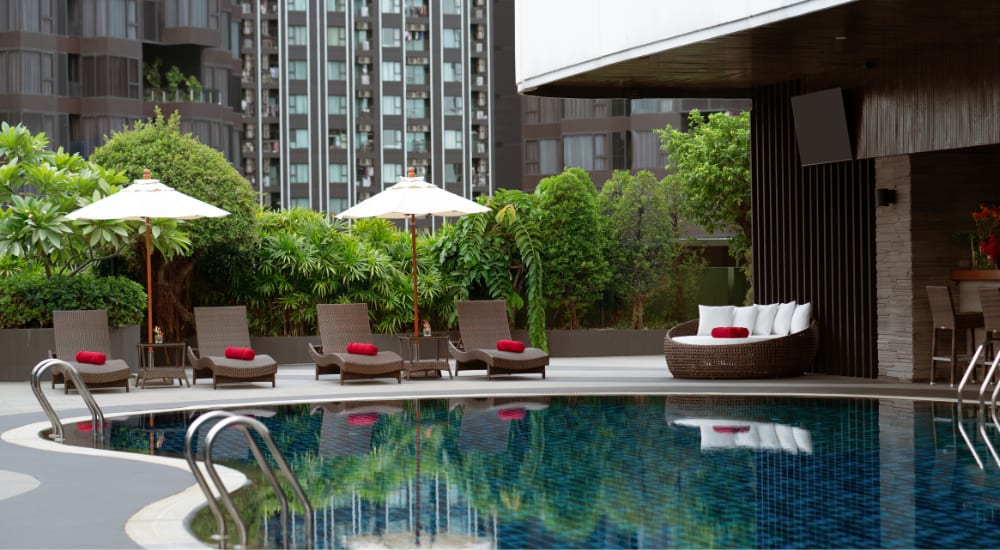
For example, the hotel Avani Ratchada Bangkok is located in the Ratchadaphisek area, near the MRT Thailand Cultural Centre station. From BKK, travellers can take the Airport Rail Link to Makkasan, make a quick interchange to the MRT at Phetchaburi, and travel just a few stops directly to the property. Please confirm current line connections and interchange points before travelling, as Bangkok’s rail network continues to expand.
Step 3: Evaluate Taxi and Ride-Hailing Routes Beyond Just Distance
Distance on a map can be deceiving. Ask the front desk for realistic journey times during your specific travel hours, and verify whether the primary route utilises toll motorways. Motorway tolls are paid directly by the passenger, so keep small currency notes ready. Areas like Ratchada and Rama 9 offer direct motorway access in both directions, which is particularly helpful for early morning departures or late-night arrivals when trains are not running. It is also worth checking whether your hotel can arrange a fixed-rate airport transfer in advance.
Step 4: Match Hotel Services to Airport-Day Needs
Once location and transit routes are settled, look for amenities that make travel days seamless: a 24-hour front desk, flexible late check-in, early breakfast boxes, secure luggage storage, and late check-out options for evening departures. Check whether the hotel features direct or covered access to the nearest MRT station—carrying heavy luggage through Bangkok’s heat or rain makes even a short walk challenging. Mid-sized, well-connected properties in business and commercial districts often suit dual-airport itineraries far better than sprawling leisure resorts.
Key Travel Tips
- Stay Centred: Book along central rail intersections rather than next to a single airport.
- Buffer Extra Time: Allow 2.5 to 3 hours before domestic departures from DMK during peak transit hours.
- Mix Your Transit: Rely on rail lines for daytime transfers, and use ride-hailing or taxis for late-night arrivals.
- Keep Addresses Ready: Save your hotel’s address written in Thai script on your phone for local taxi drivers.
- Carry Local Cash: Keep small notes available for motorway toll booths.
- Mind Train Schedules: Rail lines typically stop service around midnight, so check last-train times.
- Coordinate Departure Times: Confirm late check-out policies or luggage storage before booking evening flights.
Selecting the right accommodation for a dual-airport stay comes down to four factors: your flight schedule, rail accessibility, realistic road transit times, and practical amenities. A central base near an MRT line, such as the hotel Avani Ratchada Bangkok, provides direct flexibility for both BKK and DMK without locking you into a single tedious transfer. By verifying travel times and train schedules in advance, using two airports transforms from a potential hassle into a smooth, efficient connection.